The dispatch, safety and reporting system purpose-built for blood bikes and medical courier charities. Map every job, find the right door, sign for every handover — and know your riders can raise the alarm from anywhere.
Already using Artery? Log in to your group's app →
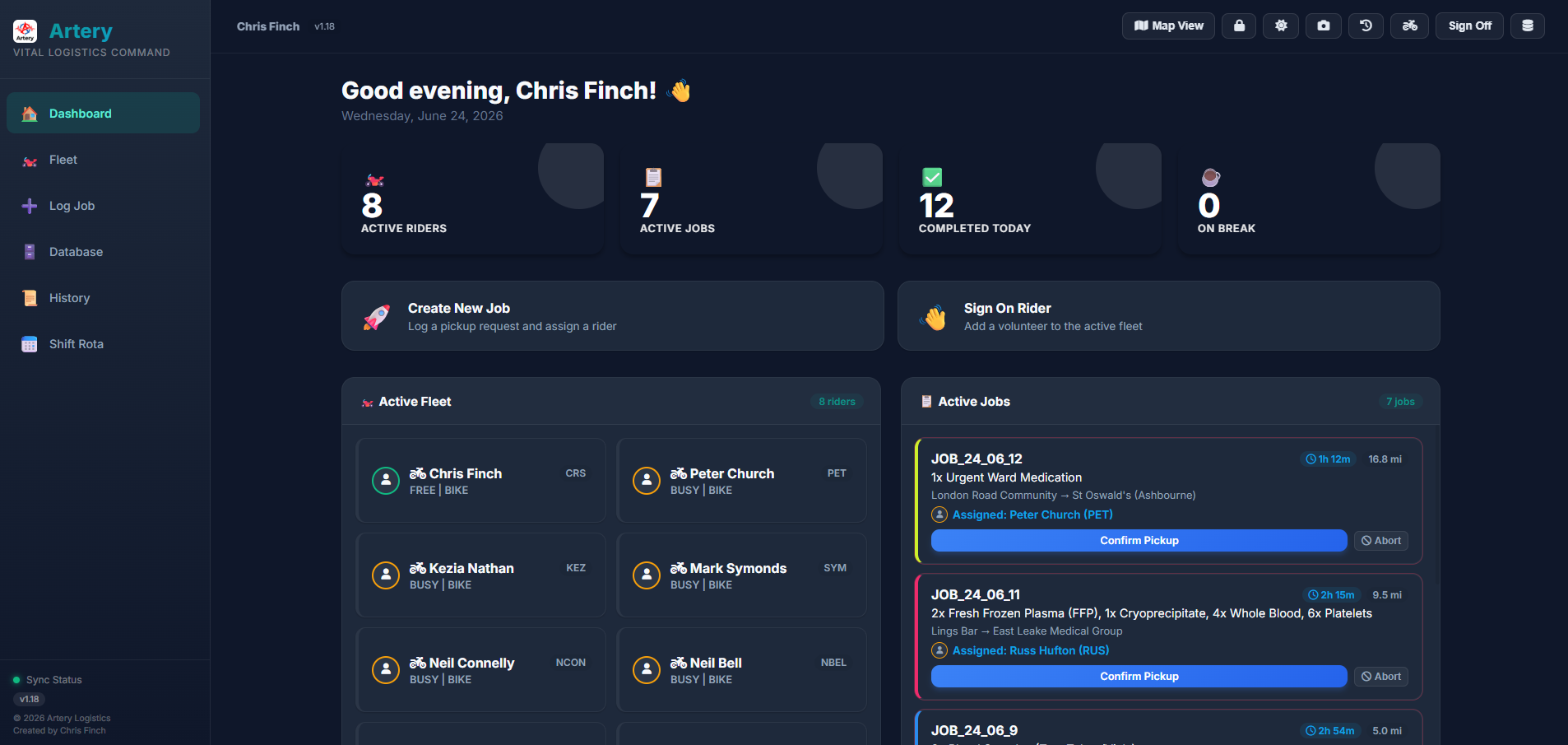
Your volunteers ride alone, at night, in weather, on roads they don't know. Artery treats that as the most important problem it has to solve — so raising the alarm takes one tap, and every stage after that happens whether or not a human notices.
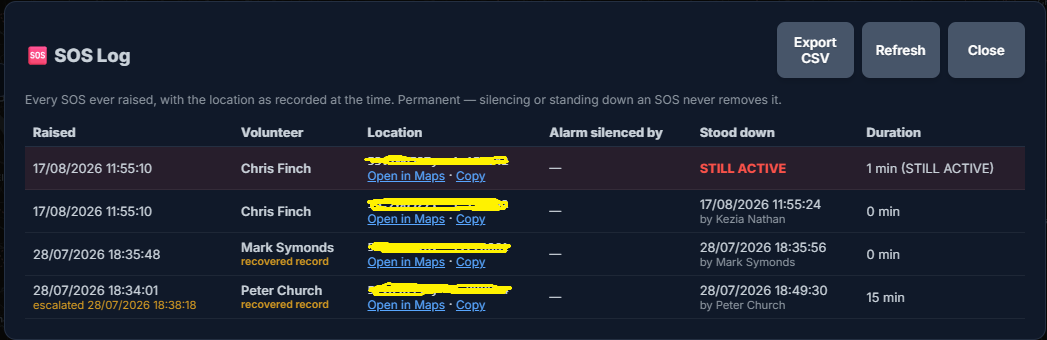
Every controller is alerted by push the instant the button is pressed. The alert carries the time it was raised and the rider's coordinates as readable text with a one-tap Copy, so a controller can read the location straight to the police or ambulance without leaving the screen.
If the phone has no data, the SOS is saved on the device and retried automatically until it gets through. A red banner stays on the rider's screen the whole time, offering a tap-to-call number for the on-duty controller. The rider can stand their own SOS down once they're safe.
If nobody has acknowledged the alarm after four minutes, everyone is paged again — and a backup email goes to the group's controller address, because a push notification can expire or be revoked without anything telling you. Two independent channels, so one failing silently isn't the end of the chain.
If no controller has touched the system for twenty minutes while there's genuine live risk on the board, Artery pages everybody once. It runs on the server, so it doesn't depend on anyone having a tab open — the quiet 3am shift is exactly when it matters.
Who raised it, when, the coordinates as captured at the time, who silenced it, who stood it down and how long it stayed active. The log is append-only — silencing an alarm never deletes it, and a later SOS never overwrites an earlier one. Export it to CSV for incident paperwork or a trustee report.
Most bad nights don't start with a crash. They start with someone being out far longer than anyone realised.
It holds a last known position — set at sign-on, at a delivery, or during a live job — never a continuous trace of where a volunteer is. The age of that position is always shown to the controller, and anything older than four hours is flagged rather than quietly trusted.
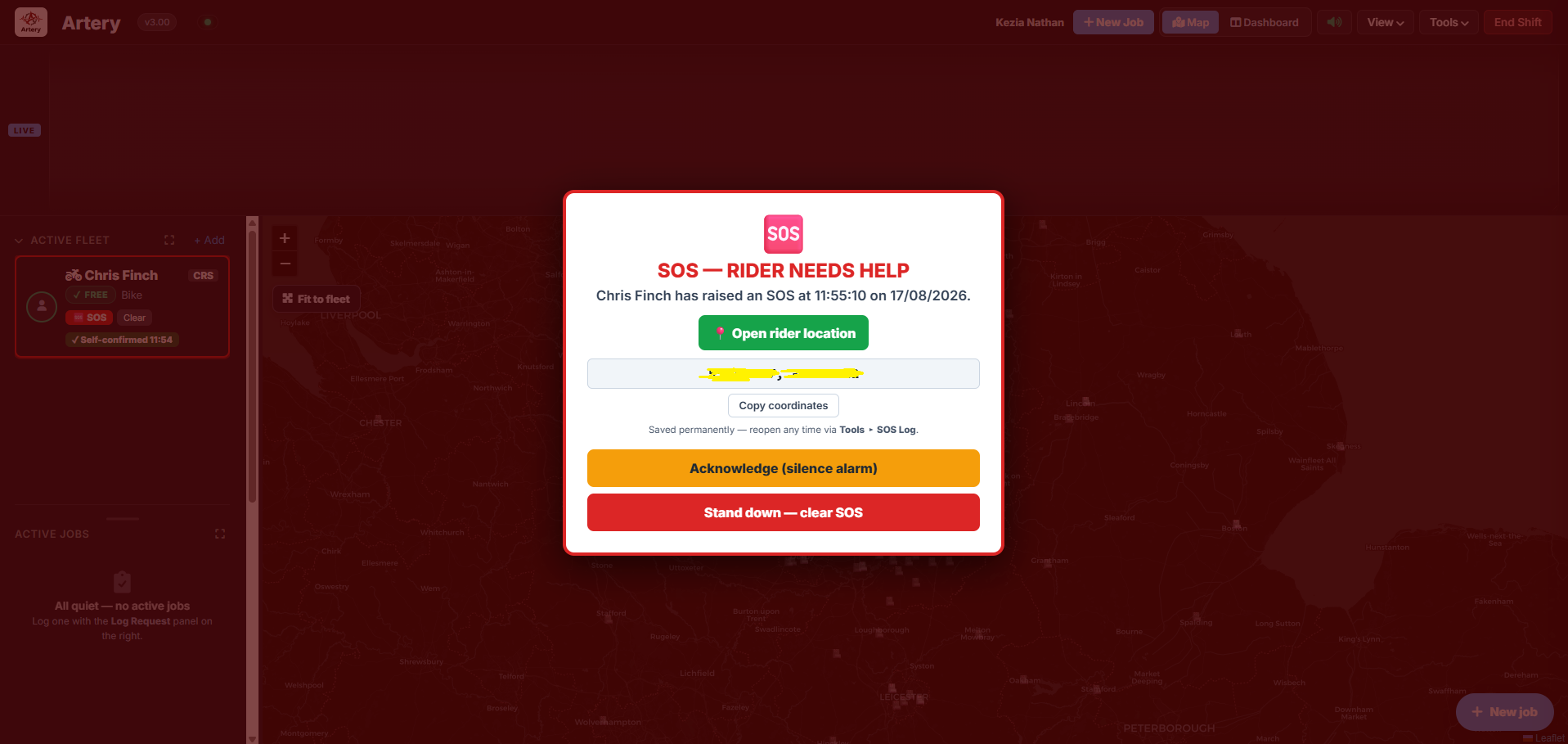
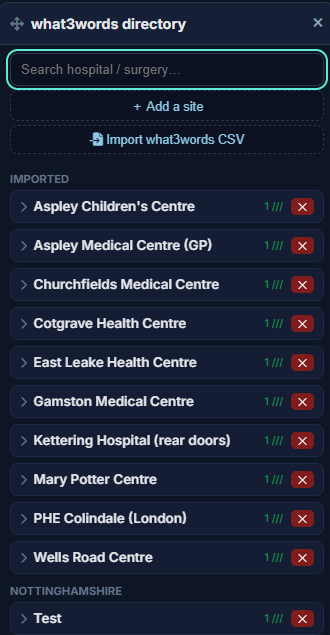
Artery brings dispatch, mapping, the rider app, signatures, rotas, hospital requests and reporting together — so controllers spend less time juggling tools and more time getting vital deliveries where they need to be.
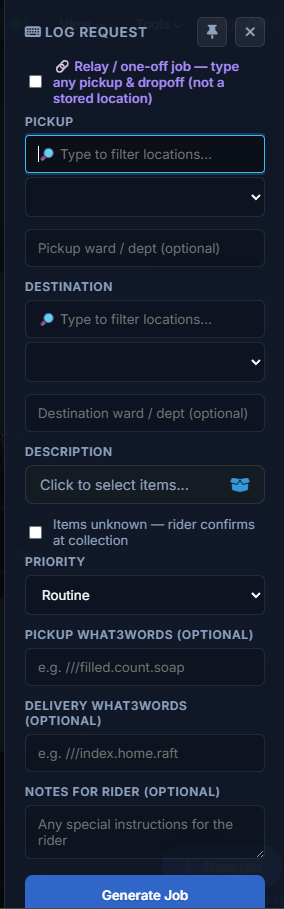
Pick a pickup and destination and Artery draws the route and generates the job in seconds. Rider markers give controllers an at-a-glance picture of who's on what, so a busy shift is easy to read.
Prefer a list to a map? There are two full controller views — a live map and a dashboard — with the same features in both. Controllers use whichever suits how they work.
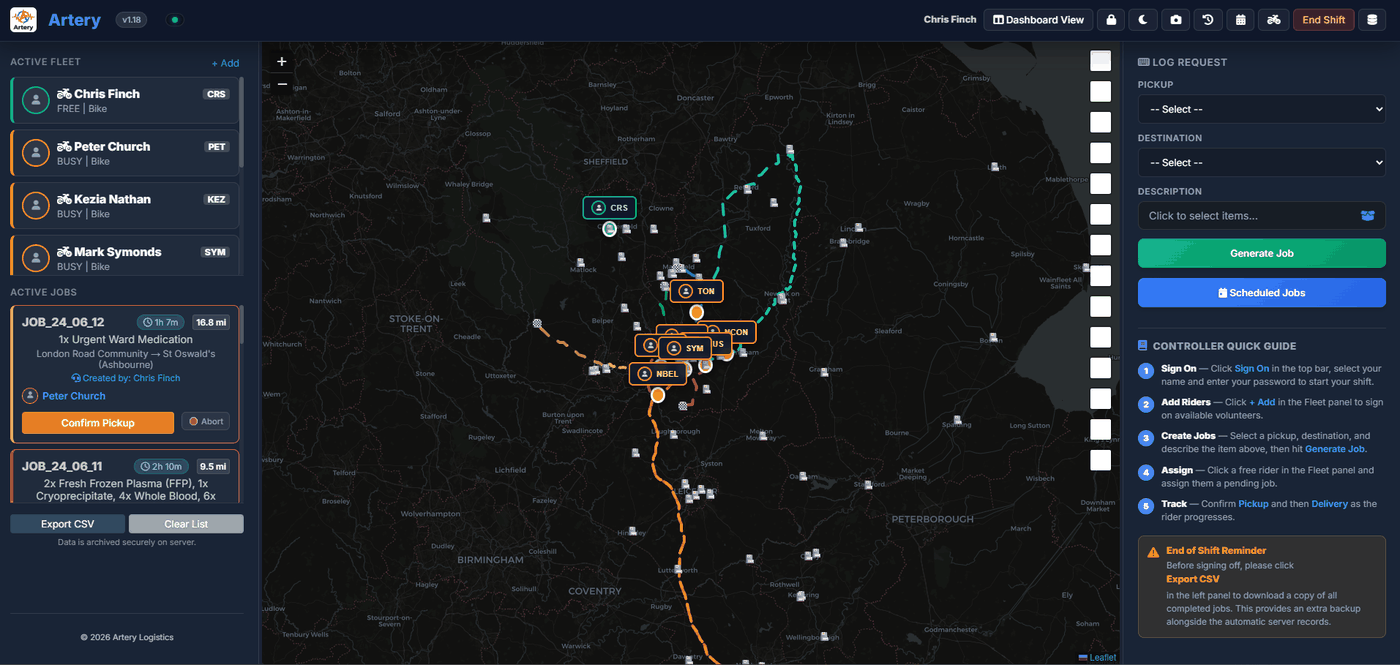
A postcode drops a rider at a building. On a large hospital site at 2am that can mean ten minutes circling in the dark looking for the right entrance. Artery holds a what3words address for individual doors and departments, so a job pins the actual entrance the rider needs.
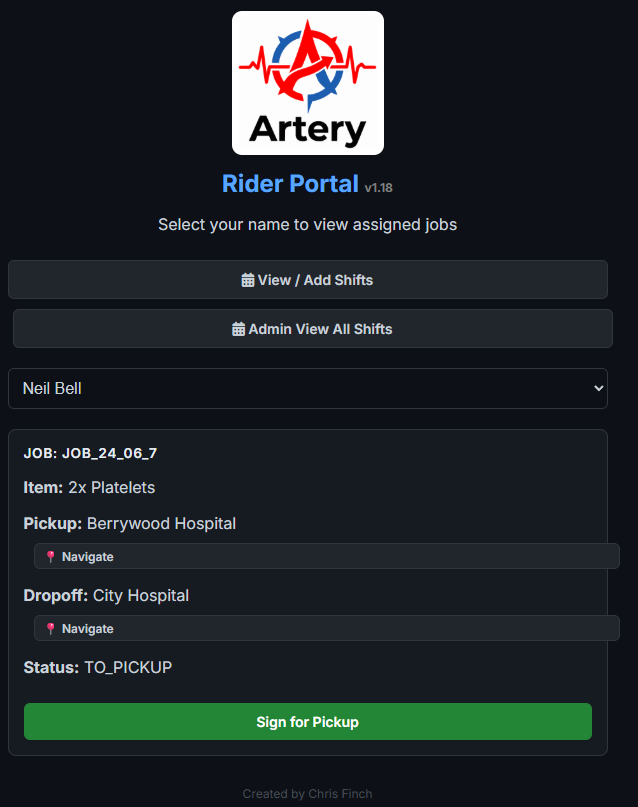
Riders pick their name to see their job, tap to navigate, record what they actually collected and capture a signature at each handover. Designed for a glance at the roadside in gloves — nothing smaller than a 48-pixel target anywhere in it.
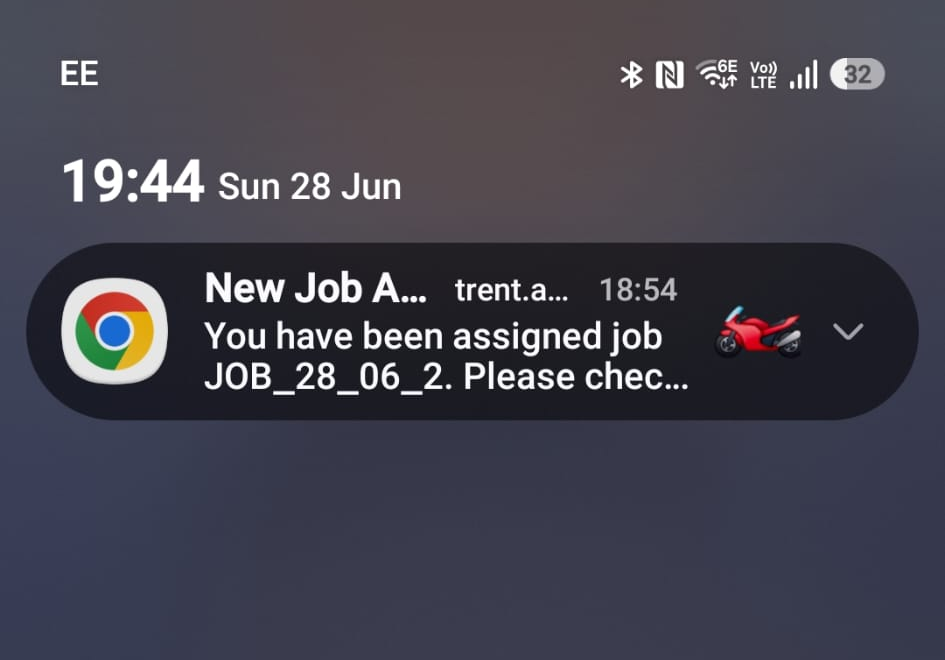
A job is offered, never forced. It only becomes active when the volunteer taps to accept, so "heading to collect" always means a real person agreed to go. Declining asks for a reason and hands it straight back to the controller.
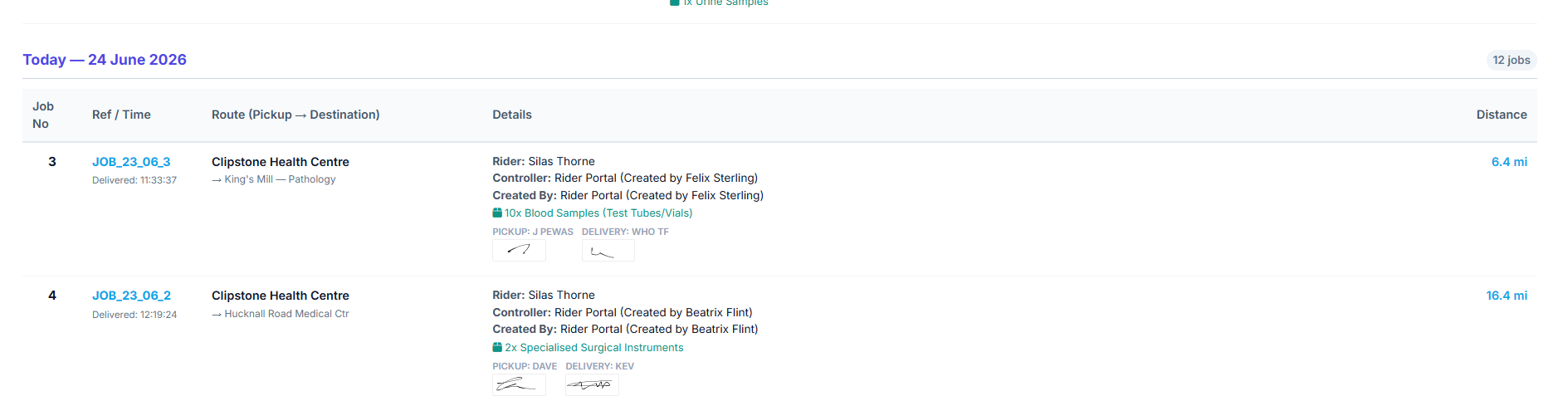
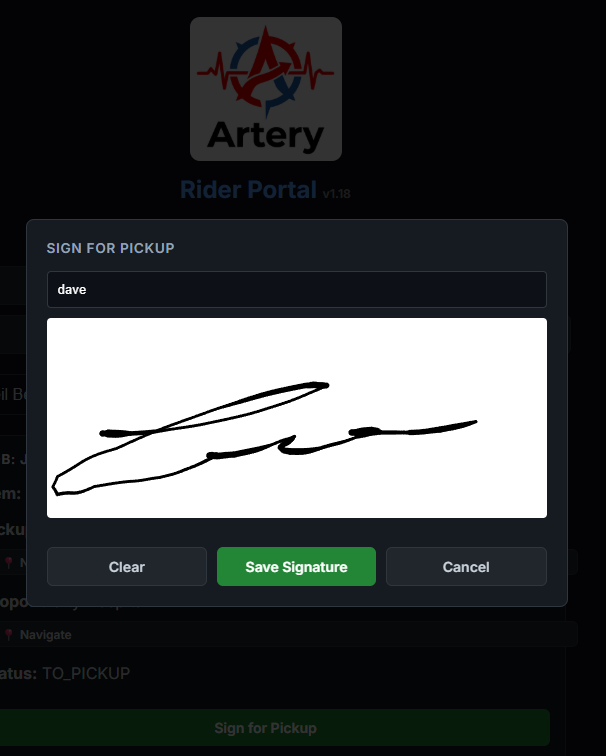
Critical cargo deserves proof. Artery captures a signature at pickup and delivery, names the person who handed over and received, records what was actually collected, and timestamps the lot.
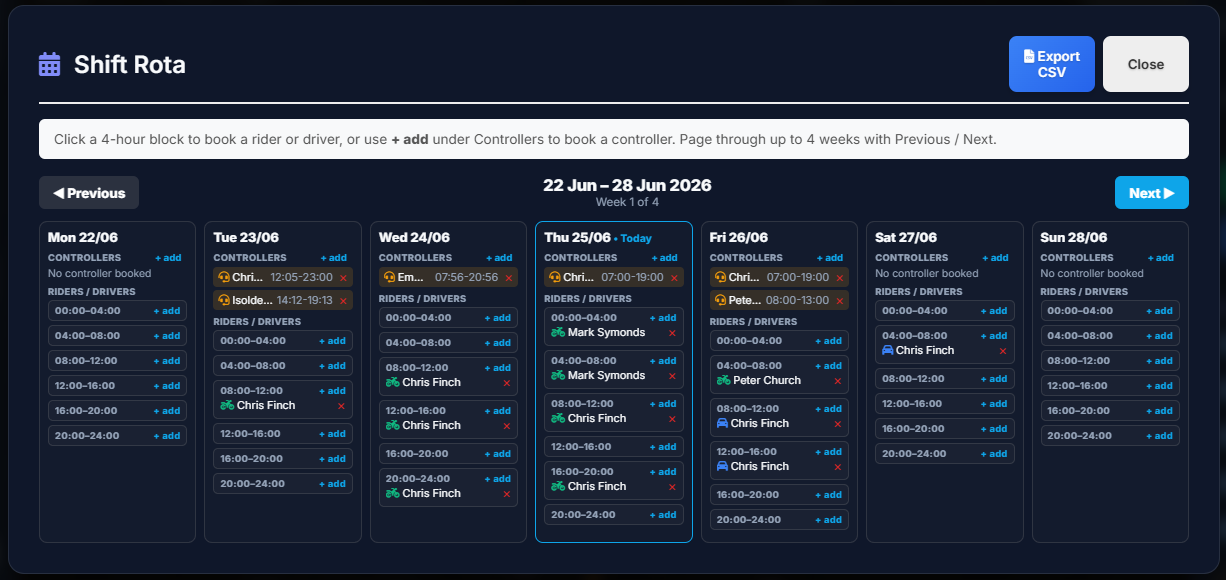
A clean week-at-a-time planner you page through up to four weeks ahead. Each day has a controllers strip on top and six 4-hour blocks beneath covering the full 24 hours. Tap a block, pick a name, choose rider or driver — booked.
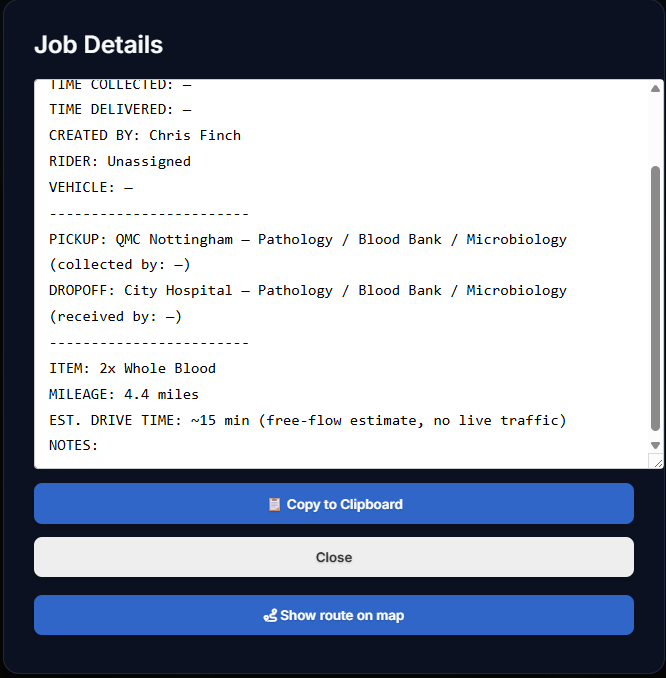
Artery works out the road route and drive time for a job, and can estimate the whole run from where the rider actually is: last known position, to pickup, to delivery. Controllers see the leg times before committing to anything.
Estimates are always shown with a "~" and labelled as estimates. They're free-flow times without live traffic — a planning aid for the controller, never a promise to quote to a hospital.
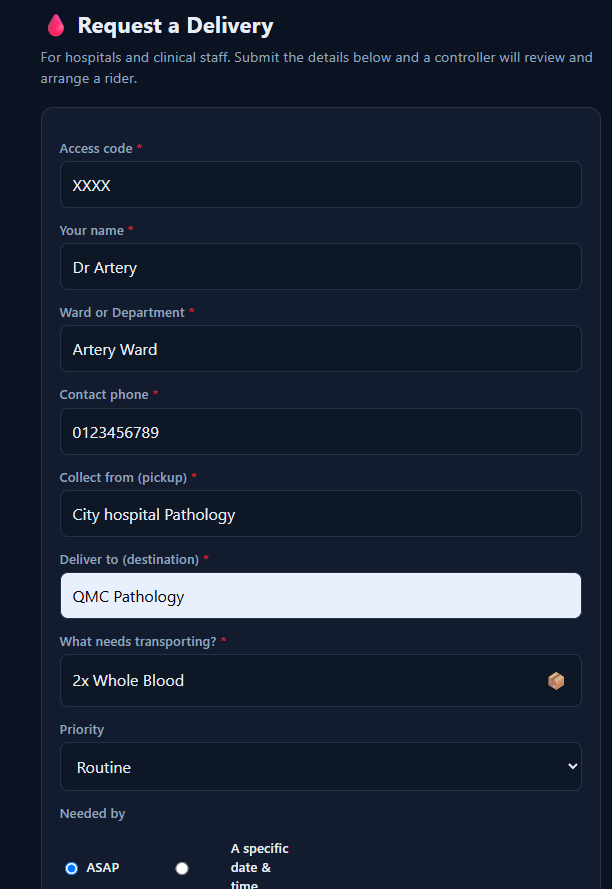
No account, no app, no training session. Ward and lab staff open a web page, enter your group's access code, and the request lands on your controllers' screen.
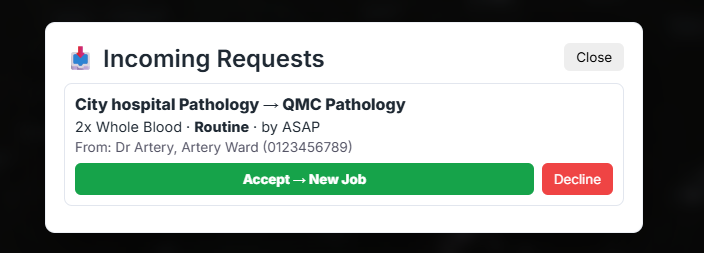
Nothing becomes a job until one of your controllers says yes. Artery captures the request — your people still make every decision, and now the decision is on the record.
Requester, ward, contact number, pickup, destination, what's moving, priority and required-by time. Two minutes on any phone or desktop, with no login to chase.
The request appears as pending. Accept it and it becomes a real job, linked to the request. Decline it with a reason — nobody is left wondering whether it was seen.
The requester's page follows the run live by reference number — accepted, en route to collect, collected, delivered. No login, and no other data exposed to them.
The phone call that never quite happened is how jobs get missed. A request raised on the portal is written down the moment it's made, with who asked, from where, and at what time — accepted or declined, it's on the record either way.
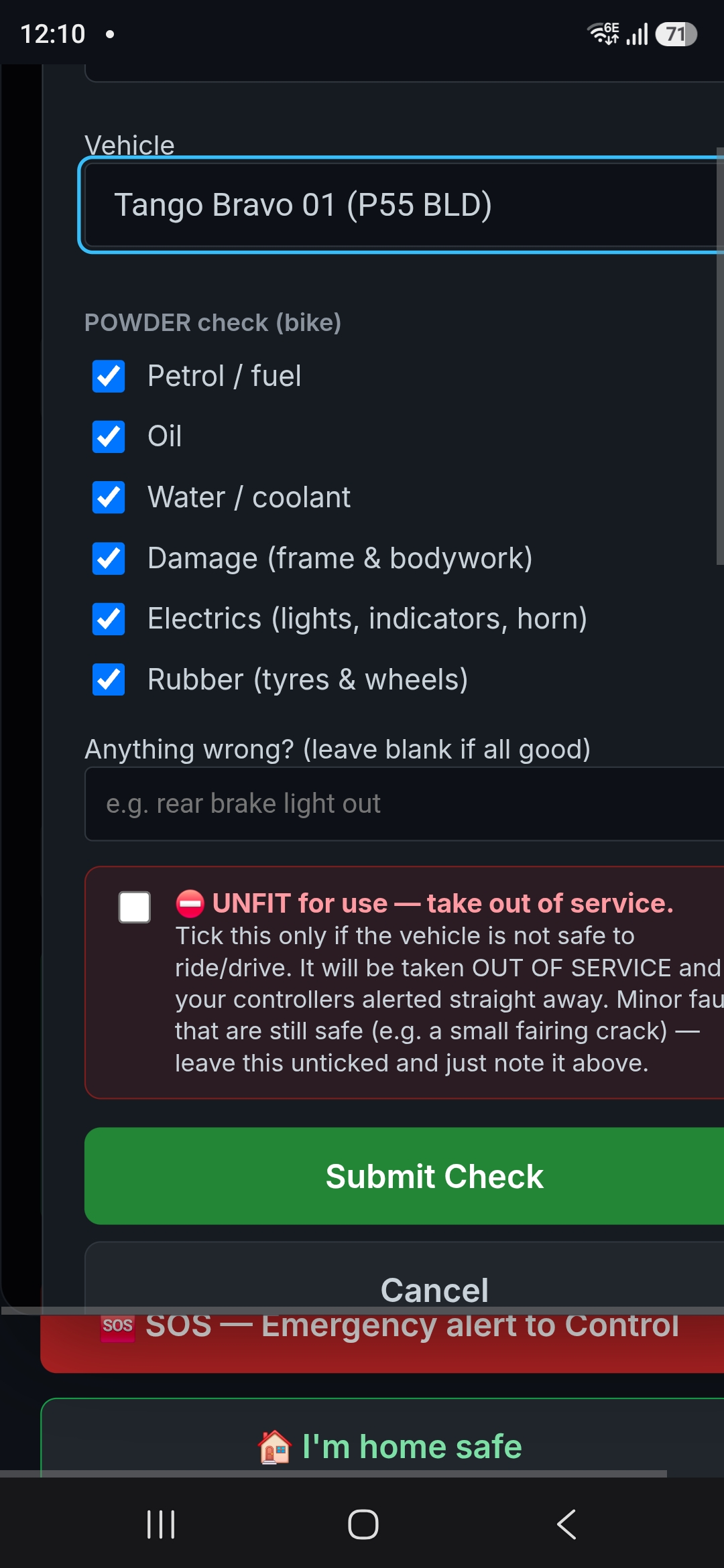
Bikes and response cars with registrations and custodians, pre-ride checklists a volunteer can file for themselves or a colleague, and per-vehicle alerts. Who filed a check is recorded separately from who it was about.
A volunteer can declare a vehicle unfit. It escalates to controllers immediately and blocks that vehicle being allocated until any controller returns it to service. The record names who declared it.
DBS, advanced-rider, insurance and induction dates tracked per volunteer, with expiry alerts — so a lapsed check is spotted before a shift, not after one.
A pinned controller-to-controller note board with acknowledgement — who read it and when. Shift changeover stops depending on someone remembering to mention something.
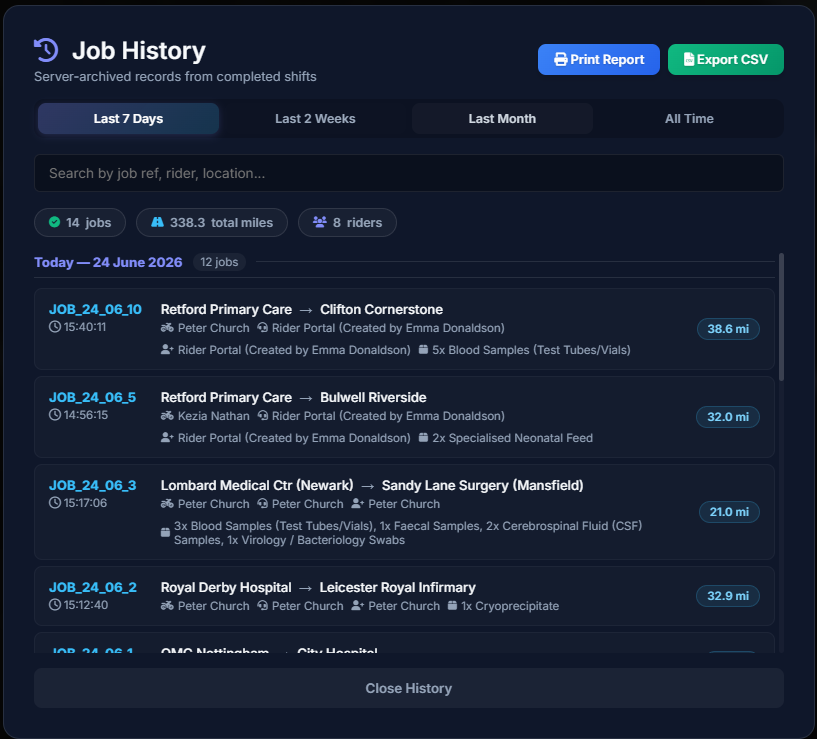
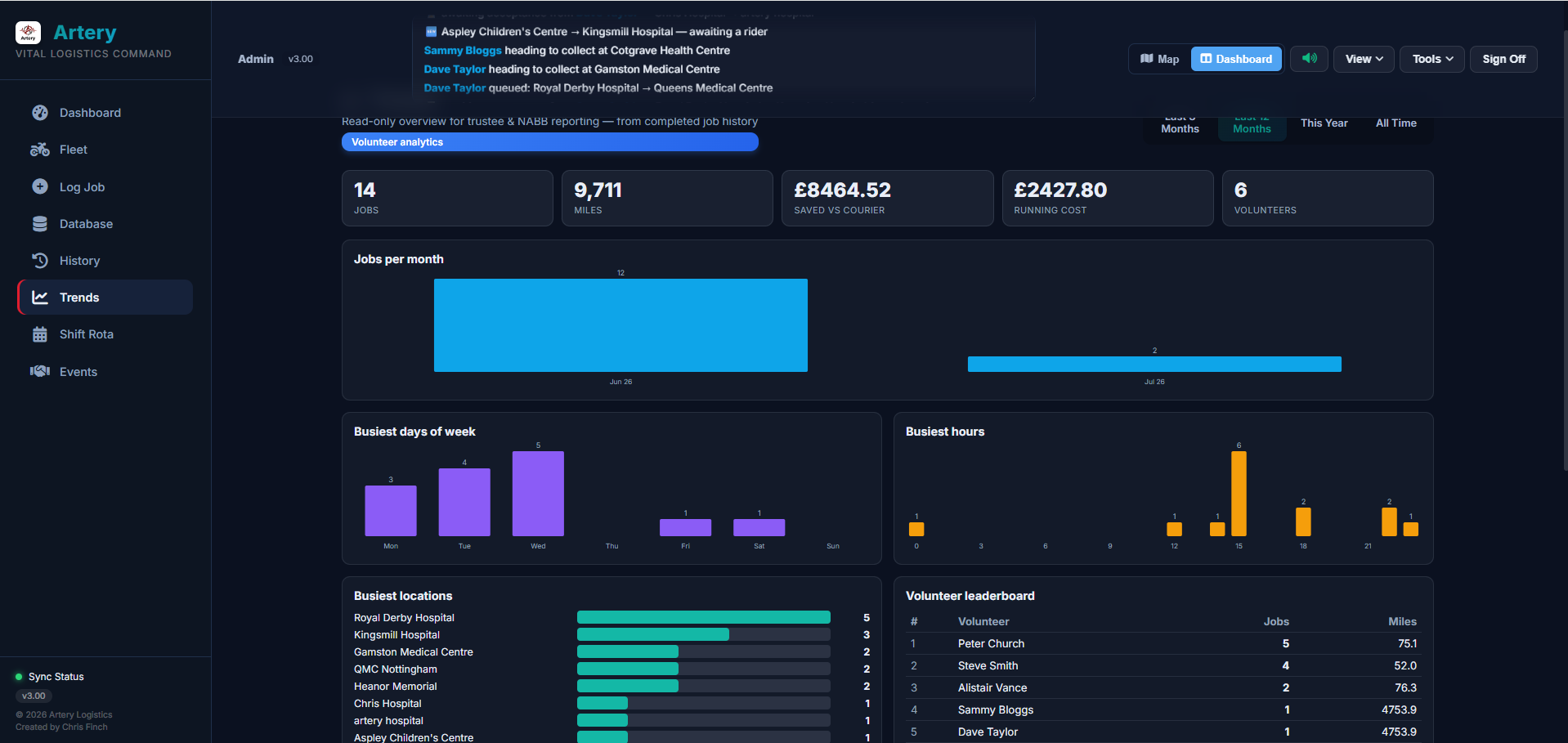
Job history with date filtering and CSV export, mileage and month-on-month trends. A job created weeks ahead is reported on the day the rider actually did it — not the day it was typed in.
Fixes and additions are layered on top of the archive. The original record is never overwritten, and any edit can be reverted.
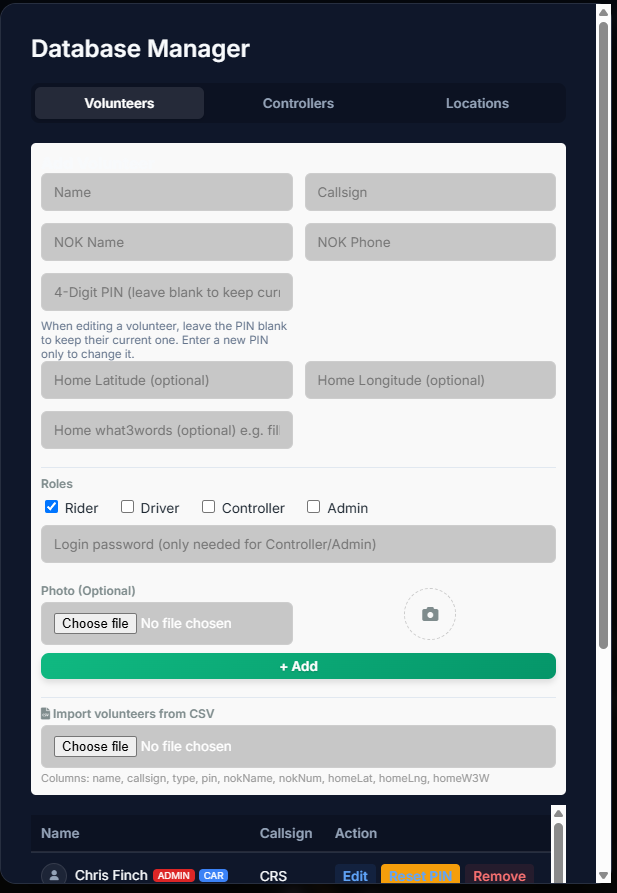
Volunteers, controllers, vehicles and locations in one place — roles, PINs, next-of-kin, home coordinates, what3words and multi-department sites, with bulk CSV import.
Create an event, let volunteers sign up from their own portal, and see the signup stats — the other half of running a charity, in the same tool.
Logins, bulk imports, history changes, vehicle-off-road declarations and request decisions are all recorded against the session that did them — not a name typed into a box.
This is software for a service where downtime isn't an inconvenience — it's a risk to patients. So Artery is engineered to stay up, stay current, and keep every byte of your history safe.
Improvements ship continuously with barely any interruption. Your control room stays live while Artery gets better underneath it.
Every change runs on a working blood bike group's live operation before it goes anywhere else. Nothing reaches you having only ever been tested in theory.
Deployments send code only — never data. Timestamped backups are taken automatically, and an unreadable file is quarantined rather than destroyed.
The latest release is Artery v3.00. Open the app and check the version shown in the corner matches — if it doesn't, refresh the page to pick up the newest version.
Artery handles real people's medical logistics, real volunteers' personal details and real NHS staff contact numbers. Security is wired through every layer, from how passwords are stored to what a browser is ever allowed to see.
Controller and admin passwords are stored only as slow, salted bcrypt hashes. Even with the files in hand, the real passwords can't be read back.
Volunteer PINs are stripped from everything the browser receives. Every PIN check happens server-side, and repeated wrong attempts hit an escalating lockout.
A random token in an HttpOnly, Secure, SameSite-strict cookie, expiring after 12 hours and extended only by real activity. Privileged actions are refused without one.
Every action the server offers requires a valid session unless it's on a short, explicit public list. A new feature can't accidentally ship unauthenticated — it's refused unless deliberately published.
Next-of-kin, home address and compliance dates are controller-only. A colleague's phone number appears only while they're actually on shift. Not signed in at all? You get names, and nothing else.
An enforcing Content Security Policy, per-IP rate limiting, a capped request size, and a strict whitelist of servable file types. Raw data files are unreachable over the web, and third-party API keys never touch the browser.
The main admin account can't be deleted or have its password changed by another admin — a deliberate safeguard so a group can never be locked out or hijacked from inside.
Deployments push code only. Volunteers, jobs, signatures and history live solely on your server, are written atomically so a crash can't tear a file, and are backed up automatically.
A written Data Protection Impact Assessment covers what's held, who can see it, where it goes and what the residual risks are — including the ones we'd rather not have. Ask and we'll send it.
Every group runs its own isolated instance with its own data and its own web address — there is no shared pool, and no group can see another's information. It all runs over HTTPS on UK hosting with auto-renewing certificates.
Real screens from the live application. Scroll to explore.

Years of work. Real shifts behind it. Built for the people who ride.
Artery wasn't bought off a shelf or bolted together from templates. It's been built feature by feature, shift by shift, by a serving blood bike volunteer — with the realities of a working operation shaping every decision. The SOS chain exists because riders go out alone. The door-level locations exist because a postcode isn't good enough at 2am.
Artery is independent: it isn't owned by any one group, and every group runs its own separate instance. Trent Blood Bikes is the first group on it, and the place every change is proven in real service before it goes anywhere else — because software for this job has to work on a wet Tuesday, not just in a demo.
The things most blood-bike groups want to know before taking a closer look.
If your charity moves blood, samples, milk, medication or anything where the clock is running — let's talk. Register your interest and we'll walk you through Artery on a demo instance with made-up data, so you can click about freely.
 Artery